What's new in Atlassian: week of 2 November 2026
Confluence Cloud XML export support ends 1 Dec, Rovo overage billing starts 3 Dec, byline apps fold to one row, and keeping AI-written pages up to standard.

Each week we round up the Atlassian changes that matter if you run or use Confluence: what changed, who it affects and what to do about it, with a link to Atlassian's own source for every item. Developer and Marketplace news is left out unless it changes something for admins.
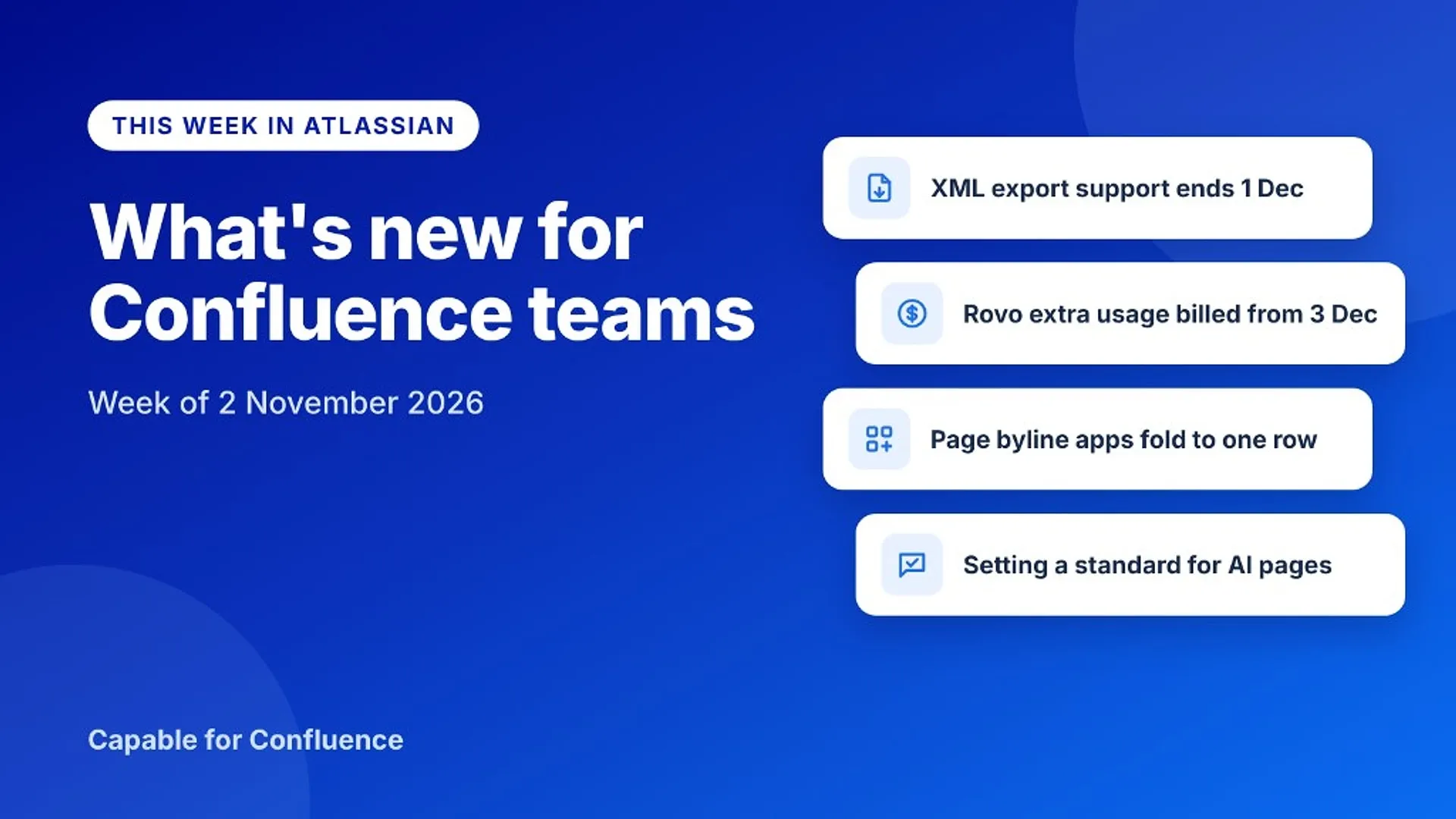
This week: support for Confluence Cloud XML export ends on 1 December, Rovo credit overage billing starts on 3 December, apps in the page byline fold into one row, and Atlassian's own research on keeping AI-written pages up to standard.
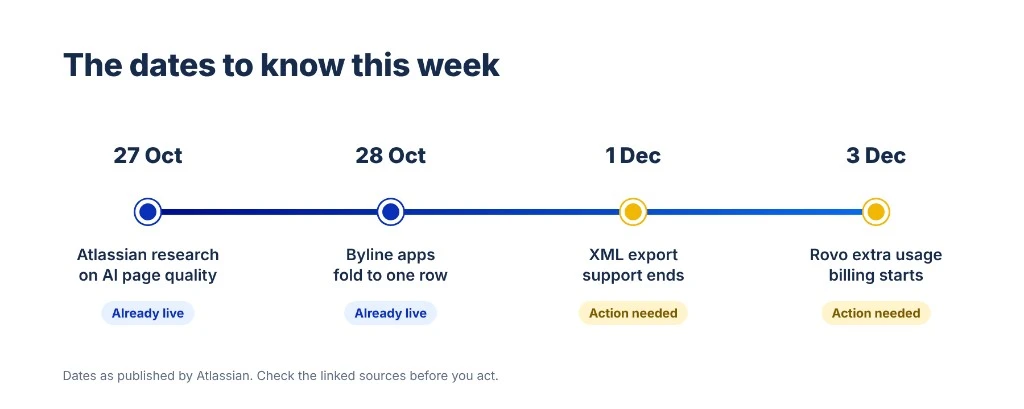
1. Confluence Cloud XML export: support ends on 1 December
What changed. Atlassian announced earlier this year that XML site and space export in Confluence Cloud reaches end of life on 1 December 2026, and that date is now four weeks away. The export isn't being removed and will keep working, but from that date Atlassian will no longer fix bugs, accept support tickets or provide SLAs for it. CSV export is the fully supported alternative, and for site backups Atlassian points to the "Create backup for cloud" option, which exports in CSV. XML import is not part of the change.
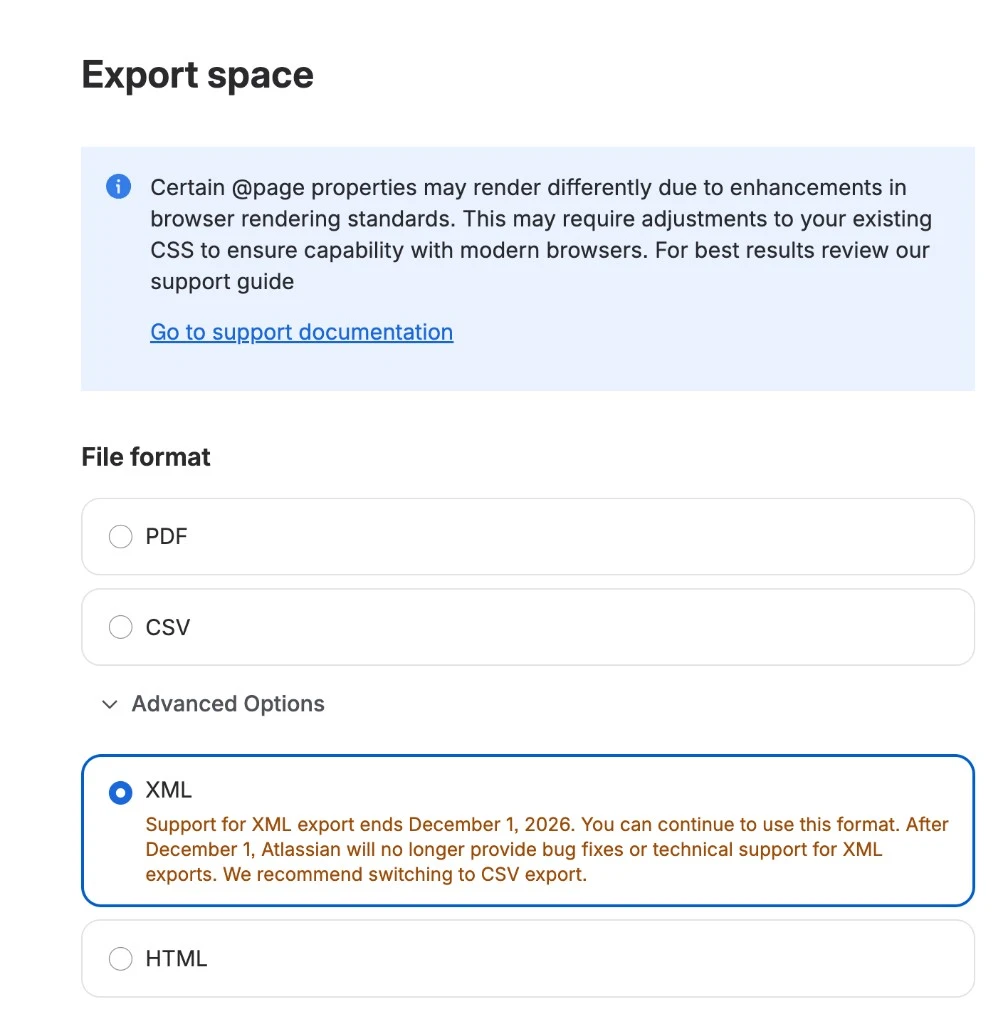
Who it affects. Confluence Cloud admins who use XML exports for backups, archiving or moving spaces between sites. Note the gap Atlassian itself calls out: Confluence Data Center's site restore only accepts XML, so CSV can't be imported into Data Center.
What to do. Find any backup job, script or runbook that relies on XML export and move it to CSV before 1 December. If you might ever need to move content from Cloud to Data Center, read Atlassian's article first and plan for that gap, because an XML export that fails after 1 December won't be supported.
Source: XML Site and Space Export: End of Life in Confluence Cloud
2. Rovo credits: extra usage billing starts on 3 December, and it's on by default
What changed. Atlassian announced this earlier, and it's now a month away. On 3 December 2026 Atlassian starts billing for Rovo credits used beyond your included allowance, and Atlassian says extra usage is enabled by default. Confluence and Jira each include 25 credits per user per month on Standard, 70 on Premium and 150 on Enterprise. Allowances are combined into one pool for the organisation, refresh monthly and don't roll over. Beyond the allowance, Atlassian gives a list price "at this time" of $0.01 per credit ($10 per 1,000 credits).
Who it affects. Organisation and billing admins on paid Confluence and Jira Cloud plans, and anyone whose teams use Rovo Chat, Rovo agents or AI features in pages. Fifty Standard users on one of those apps share 1,250 credits a month, so a busy team or an automation that calls an agent can use that up well before the month ends.
What to do. Before 3 December, decide whether you want a spending cap or no extra usage at all. Admins get alerts at 80% and 100% of the allowance, and organisation and billing admins can set a spending limit or turn extra usage off in Atlassian Administration. Organisation admins can check current usage in Atlassian Administration under Usage, then Meters, so any cap is based on real numbers. Prices can change, so check Atlassian's page before you budget.
Sources: How Rovo credits work · How usage-based pricing works
3. Apps in the page byline now fold into one row
What changed. Atlassian announced on 28 October that the byline on Confluence Cloud pages, live docs and blog posts will show a single row of apps by default. Readers click to expand the byline to see the rest, so some apps may be hidden until they do.
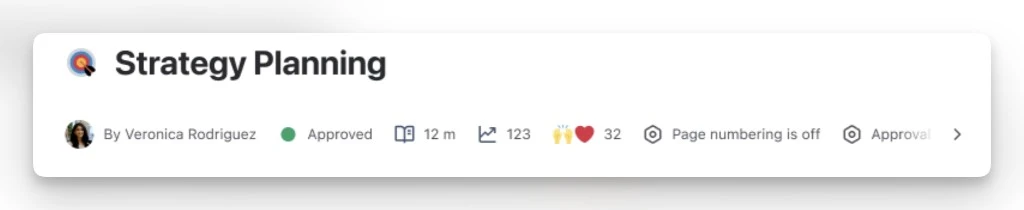
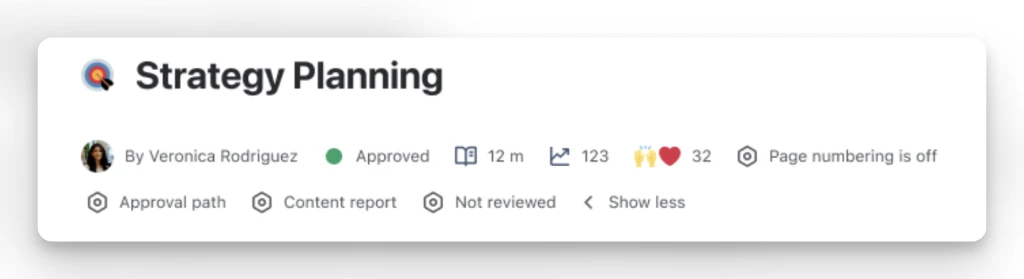
Who it affects. Sites with several apps that add items to the page byline, and the people who rely on seeing those items at a glance, for example a status, a review date or a page owner.
What to do. If the collapsed byline will hide something your readers need, a site admin can bring back the full view in Confluence administration under General configuration, using the "Show all byline apps by default" setting. Otherwise, let your users know where the extra items have gone before they ask.
Source: Confluence Cloud changelog, 28 October 2026
4. Atlassian's research on keeping AI-written Confluence pages up to standard
What changed. On 27 October Atlassian's Teamwork Lab published findings on "workslop": AI-generated work that looks polished but does little to move a project forward. An earlier Teamwork Lab study of 903 US knowledge workers found that reviewers were 22% less likely to catch a critical flaw in the polished version of a draft. The new piece describes a 60-minute workshop with 31 Atlassian employees on what a good Confluence page looks like and how to use AI to write one. Atlassian reports better agreement on standards afterwards, while saying the results "are not statistically significant given that this was a small pilot study".
Who it affects. Teams that use Rovo or other AI tools to draft Confluence pages, and anyone who reviews or approves those pages.
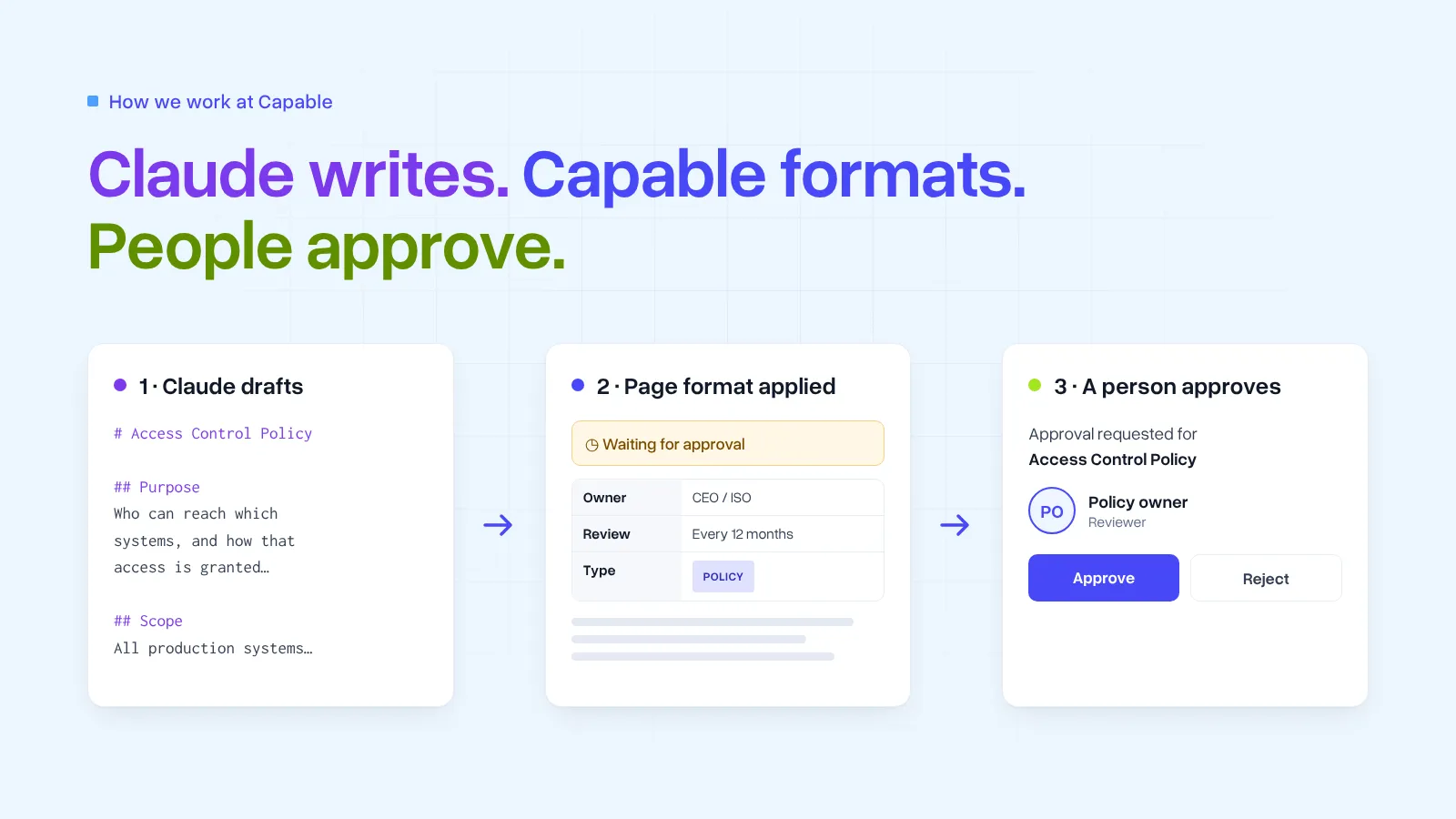
What to do. Agree as a team what a good page looks like, and write it down where people draft. Treat a polished AI draft as a reason to review more carefully, not less. If pages need a sign-off before they're treated as final, the approvals in Capable for Confluence let you add an approval step to a page.
Source: AI workslop is a standards problem
That's the week
Spotted something we missed, or want a change explained in more depth? Tell us and we'll cover it next week. Dates and prices are as Atlassian published them on 2 November 2026 and can change, so check the linked source before you act.
Try Capable for Confluence free on the Atlassian Marketplace →
Atlassian, Confluence, Jira and Rovo are trademarks of Atlassian Pty Ltd. Capable Works Limited is not affiliated with, endorsed by or sponsored by Atlassian.